Contemporary Art Must Be Reproducible Not Forged but Reproduced Otherwise It Is Not Contemporary
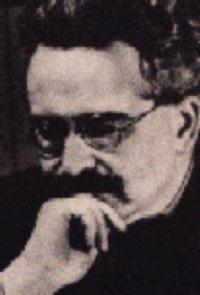
Walter Benjamin (1936)
The Work of Art in the Historic period of Mechanical Reproduction
Source: UCLA School of Theater, Moving-picture show and Television;
Translated: past Harry Zohn;
Published: by Schocken/Random Firm, ed. by Hannah Arendt;
Transcribed: by Andy Blunden 1998; proofed and corrected Feb. 2005.
"Our fine arts were developed, their types and uses were established, in times very different from the present, by men whose power of activeness upon things was insignificant in comparison with ours. Merely the astonishing growth of our techniques, the adaptability and precision they have attained, the ideas and habits they are creating, make it a certainty that profound changes are impending in the aboriginal craft of the Beautiful. In all the arts in that location is a physical component which tin no longer exist considered or treated equally information technology used to be, which cannot remain unaffected past our modernistic cognition and power. For the last xx years neither thing nor space nor time has been what information technology was from time immemorial. We must await bully innovations to transform the unabridged technique of the arts, thereby affecting artistic invention itself and maybe even bringing about an amazing change in our very notion of fine art."
Paul Val�ry, Pièces sur L'Art, 1931
Le Conquete de 50'ubiquite
Preface
When Marx undertook his critique of the capitalistic fashion of production, this mode was in its infancy. Marx directed his efforts in such a way as to give them prognostic value. He went back to the bones weather condition underlying capitalistic production and through his presentation showed what could be expected of commercialism in the future. The result was that one could expect information technology not simply to exploit the proletariat with increasing intensity, but ultimately to create atmospheric condition which would make information technology possible to abolish commercialism itself.
The transformation of the superstructure, which takes place far more than slowly than that of the substructure, has taken more than half a century to manifest in all areas of culture the change in the conditions of product. Merely today can it be indicated what class this has taken. Certain prognostic requirements should exist met by these statements. Withal, theses about the art of the proletariat afterward its assumption of ability or about the art of a classless society would have less bearing on these demands than theses most the developmental tendencies of fine art under present atmospheric condition of production. Their dialectic is no less noticeable in the superstructure than in the economy. It would therefore exist wrong to underestimate the value of such theses as a weapon. They brush aside a number of outmoded concepts, such equally inventiveness and genius, eternal value and mystery – concepts whose uncontrolled (and at nowadays about uncontrollable) awarding would lead to a processing of data in the Fascist sense. The concepts which are introduced into the theory of fine art in what follows differ from the more familiar terms in that they are completely useless for the purposes of Fascism. They are, on the other paw, useful for the conception of revolutionary demands in the politics of art.
I
In principle a work of art has e'er been reproducible. Human-fabricated artifacts could always exist imitated past men. Replicas were made by pupils in practice of their craft, past masters for diffusing their works, and, finally, by third parties in the pursuit of gain. Mechanical reproduction of a piece of work of art, however, represents something new. Historically, it avant-garde intermittently and in leaps at long intervals, but with accelerated intensity. The Greeks knew simply two procedures of technically reproducing works of art: founding and stamping. Bronzes, terra cottas, and coins were the only art works which they could produce in quantity. All others were unique and could non be mechanically reproduced. With the woodcut graphic art became mechanically reproducible for the first time, long before script became reproducible by print. The enormous changes which printing, the mechanical reproduction of writing, has brought about in literature are a familiar story. Withal, within the miracle which we are here examining from the perspective of world history, print is merely a special, though particularly important, example. During the Heart Ages engraving and etching were added to the woodcut; at the starting time of the nineteenth century lithography made its appearance. With lithography the technique of reproduction reached an essentially new stage. This much more direct procedure was distinguished by the tracing of the pattern on a stone rather than its incision on a block of wood or its etching on a copperplate and permitted graphic art for the first fourth dimension to put its products on the marketplace, not only in large numbers as hitherto, merely also in daily changing forms. Lithography enabled graphic art to illustrate everyday life, and it began to keep stride with press. Just merely a few decades subsequently its invention, lithography was surpassed past photography. For the starting time time in the procedure of pictorial reproduction, photography freed the mitt of the most important artistic functions which henceforth devolved only upon the eye looking into a lens. Since the eye perceives more swiftly than the hand can describe, the procedure of pictorial reproduction was accelerated so enormously that it could keep pace with speech. A film operator shooting a scene in the studio captures the images at the speed of an actor'southward oral communication. Just as lithography virtually implied the illustrated newspaper, so did photography foreshadow the sound film. The technical reproduction of sound was tackled at the end of the last century. These convergent endeavors made predictable a state of affairs which Paul Valery pointed up in this sentence:
"Merely every bit water, gas, and electricity are brought into our houses from far off to satisfy our needs in response to a minimal effort, so we shall exist supplied with visual or auditory images, which will announced and disappear at a simple movement of the hand, hardly more than a sign."
Around 1900 technical reproduction had reached a standard that non only permitted it to reproduce all transmitted works of art and thus to cause the most profound alter in their impact upon the public; information technology also had captured a place of its own among the artistic processes. For the report of this standard naught is more revealing than the nature of the repercussions that these two different manifestations – the reproduction of works of art and the fine art of the film – accept had on art in its traditional form.
Ii
Fifty-fifty the nearly perfect reproduction of a piece of work of art is lacking in 1 element: its presence in time and space, its unique existence at the place where it happens to be. This unique existence of the piece of work of fine art adamant the history to which it was subject throughout the time of its existence. This includes the changes which it may take suffered in physical condition over the years also as the various changes in its ownership. The traces of the first can be revealed only by chemical or physical analyses which it is incommunicable to perform on a reproduction; changes of ownership are bailiwick to a tradition which must be traced from the state of affairs of the original.
The presence of the original is the prerequisite to the concept of authenticity. Chemical analyses of the patina of a bronze can help to establish this, as does the proof that a given manuscript of the Middle Ages stems from an archive of the fifteenth century. The whole sphere of actuality is outside technical – and, of course, not only technical – reproducibility. Confronted with its manual reproduction, which was usually branded as a forgery, the original preserved all its authorisation; non so vis-à-vis technical reproduction. The reason is twofold. Outset, procedure reproduction is more independent of the original than transmission reproduction. For example, in photography, process reproduction can bring out those aspects of the original that are unattainable to the naked eye yet accessible to the lens, which is adaptable and chooses its angle at volition. And photographic reproduction, with the assist of certain processes, such as enlargement or slow move, tin capture images which escape natural vision. Secondly, technical reproduction tin can put the copy of the original into situations which would be out of accomplish for the original itself. In a higher place all, information technology enables the original to run across the beholder halfway, be it in the form of a photograph or a phonograph record. The cathedral leaves its locale to be received in the studio of a lover of art; the choral production, performed in an auditorium or in the open up air, resounds in the drawing room.
The situations into which the production of mechanical reproduction tin can exist brought may not touch the actual piece of work of art, all the same the quality of its presence is always depreciated. This holds not only for the art work but besides, for instance, for a mural which passes in review before the spectator in a film. In the case of the art object, a near sensitive nucleus – namely, its authenticity – is interfered with whereas no natural object is vulnerable on that score. The actuality of a thing is the essence of all that is transmissible from its kickoff, ranging from its noun elapsing to its testimony to the history which it has experienced. Since the historical testimony rests on the authenticity, the old, likewise, is jeopardized past reproduction when substantive duration ceases to thing. And what is really jeopardized when the historical testimony is affected is the say-so of the object.
Ane might subsume the eliminated element in the term "aureola" and get on to say: that which withers in the historic period of mechanical reproduction is the aura of the work of fine art. This is a symptomatic process whose significance points beyond the realm of art. Ane might generalize by proverb: the technique of reproduction detaches the reproduced object from the domain of tradition. By making many reproductions it substitutes a plurality of copies for a unique existence. And in permitting the reproduction to meet the beholder or listener in his own detail situation, it reactivates the object reproduced. These two processes pb to a tremendous shattering of tradition which is the obverse of the gimmicky crisis and renewal of mankind. Both processes are intimately connected with the contemporary mass movements. Their virtually powerful agent is the pic. Its social significance, specially in its most positive form, is inconceivable without its destructive, cathartic attribute, that is, the liquidation of the traditional value of the cultural heritage. This phenomenon is well-nigh palpable in the great historical films. It extends to ever new positions. In 1927 Abel Gance exclaimed enthusiastically:
"Shakespeare, Rembrandt, Beethoven will make films... all legends, all mythologies and all myths, all founders of organized religion, and the very religions... await their exposed resurrection, and the heroes oversupply each other at the gate."
Presumably without intending it, he issued an invitation to a far-reaching liquidation.
Iii
During long periods of history, the style of human sense perception changes with humanity'south entire mode of existence. The manner in which human sense perception is organized, the medium in which it is achieved, is adamant non only by nature but by historical circumstances besides. The fifth century, with its keen shifts of population, saw the birth of the late Roman art industry and the Vienna Genesis, and at that place developed not but an art unlike from that of antiquity but also a new kind of perception. The scholars of the Viennese schoolhouse, Riegl and Wickhoff, who resisted the weight of classical tradition nether which these later art forms had been cached, were the first to draw conclusions from them concerning the organization of perception at the time. Still far-reaching their insight, these scholars limited themselves to showing the significant, formal authentication which characterized perception in late Roman times. They did non endeavor – and, perhaps, saw no way – to show the social transformations expressed by these changes of perception. The conditions for an analogous insight are more than favorable in the present. And if changes in the medium of contemporary perception can be comprehended equally disuse of the aura, it is possible to evidence its social causes.
The concept of aura which was proposed above with reference to historical objects may usefully be illustrated with reference to the aura of natural ones. We define the aura of the latter as the unique phenomenon of a distance, however shut it may be. If, while resting on a summer afternoon, you follow with your eyes a mountain range on the horizon or a branch which casts its shadow over yous, y'all experience the aura of those mountains, of that branch. This image makes it easy to comprehend the social bases of the contemporary decay of the aureola. It rests on two circumstances, both of which are related to the increasing significance of the masses in gimmicky life. Namely, the desire of contemporary masses to bring things "closer" spatially and humanly, which is merely equally ardent as their bent toward overcoming the uniqueness of every reality by accepting its reproduction. Every day the urge grows stronger to get agree of an object at very close range by manner of its likeness, its reproduction. Unmistakably, reproduction as offered by picture magazines and newsreels differs from the epitome seen by the unarmed eye. Uniqueness and permanence are every bit closely linked in the latter as are transitoriness and reproducibility in the quondam. To pry an object from its shell, to destroy its aura, is the mark of a perception whose "sense of the universal equality of things" has increased to such a caste that it extracts it even from a unique object by ways of reproduction. Thus is manifested in the field of perception what in the theoretical sphere is noticeable in the increasing importance of statistics. The aligning of reality to the masses and of the masses to reality is a procedure of unlimited scope, as much for thinking as for perception.
IV
The uniqueness of a piece of work of art is inseparable from its being imbedded in the cloth of tradition. This tradition itself is thoroughly live and extremely changeable. An ancient statue of Venus, for example, stood in a different traditional context with the Greeks, who fabricated it an object of veneration, than with the clerics of the Middle Ages, who viewed it as an ominous idol. Both of them, however, were every bit confronted with its uniqueness, that is, its aura. Originally the contextual integration of art in tradition found its expression in the cult. We know that the earliest fine art works originated in the service of a ritual – outset the magical, then the religious kind. It is significant that the existence of the work of art with reference to its aura is never entirely separated from its ritual part. In other words, the unique value of the "authentic" work of art has its basis in ritual, the location of its original use value. This ritualistic basis, nonetheless remote, is withal recognizable as secularized ritual fifty-fifty in the near profane forms of the cult of beauty. The secular cult of beauty, developed during the Renaissance and prevailing for three centuries, conspicuously showed that ritualistic basis in its decline and the first deep crisis which befell it. With the advent of the outset truly revolutionary ways of reproduction, photography, simultaneously with the ascension of socialism, art sensed the approaching crisis which has become axiomatic a century later on. At the fourth dimension, fine art reacted with the doctrine of fifty'art cascade l'art, that is, with a theology of art. This gave rise to what might be chosen a negative theology in the form of the idea of "pure" art, which not only denied any social function of art simply also any categorizing by subject matter. (In poesy, Mallarme was the offset to take this position.)
An assay of art in the age of mechanical reproduction must do justice to these relationships, for they lead us to an all-important insight: for the get-go fourth dimension in world history, mechanical reproduction emancipates the work of art from its parasitical dependence on ritual. To an ever greater degree the work of art reproduced becomes the piece of work of art designed for reproducibility. From a photographic negative, for example, one can make any number of prints; to ask for the "authentic" impress makes no sense. Merely the instant the criterion of authenticity ceases to be applicable to artistic production, the total role of art is reversed. Instead of existence based on ritual, it begins to exist based on some other practice – politics.
V
Works of art are received and valued on different planes. Two polar types stand out; with one, the accent is on the cult value; with the other, on the exhibition value of the work. Artistic product begins with ceremonial objects destined to serve in a cult. 1 may assume that what mattered was their existence, not their being on view. The elk portrayed by the homo of the Stone Age on the walls of his cave was an instrument of magic. He did betrayal it to his beau men, only in the main it was meant for the spirits. Today the cult value would seem to demand that the piece of work of art remain subconscious. Certain statues of gods are attainable only to the priest in the cella; certain Madonnas remain covered nearly all year round; certain sculptures on medieval cathedrals are invisible to the spectator on footing level. With the emancipation of the various art practices from ritual go increasing opportunities for the exhibition of their products. It is easier to exhibit a portrait bust that can be sent here and there than to exhibit the statue of a divinity that has its fixed place in the interior of a temple. The aforementioned holds for the painting equally against the mosaic or fresco that preceded it. And even though the public presentability of a mass originally may have been simply as smashing as that of a symphony, the latter originated at the moment when its public presentability promised to surpass that of the mass.
With the different methods of technical reproduction of a work of fine art, its fitness for exhibition increased to such an extent that the quantitative shift betwixt its 2 poles turned into a qualitative transformation of its nature. This is comparable to the situation of the piece of work of art in prehistoric times when, by the accented emphasis on its cult value, it was, starting time and foremost, an instrument of magic. Only later did it come to exist recognized as a piece of work of fine art. In the same way today, by the absolute emphasis on its exhibition value the work of art becomes a creation with entirely new functions, among which the one nosotros are conscious of, the artistic function, later on may be recognized every bit incidental. This much is sure: today photography and the film are the most serviceable exemplifications of this new function.
VI
In photography, exhibition value begins to displace cult value all along the line. Only cult value does non give style without resistance. It retires into an ultimate retrenchment: the human countenance. It is no accident that the portrait was the focal bespeak of early photography. The cult of remembrance of loved ones, absent or dead, offers a last refuge for the cult value of the picture. For the last time the aureola emanates from the early on photographs in the fleeting expression of a human face. This is what constitutes their melancholy, unequalled beauty. Just every bit man withdraws from the photographic image, the exhibition value for the get-go time shows its superiority to the ritual value. To accept pinpointed this new stage constitutes the incomparable significance of Atget, who, effectually 1900, took photographs of deserted Paris streets. It has quite justly been said of him that he photographed them similar scenes of crime. The scene of a law-breaking, too, is deserted; it is photographed for the purpose of establishing evidence. With Atget, photographs become standard evidence for historical occurrences, and larn a hidden political significance. They need a specific kind of approach; free-floating contemplation is non appropriate to them. They stir the viewer; he feels challenged by them in a new way. At the same time pic magazines brainstorm to put upwards signposts for him, right ones or incorrect ones, no matter. For the offset time, captions have become obligatory. And it is clear that they take an birthday different character than the championship of a painting. The directives which the captions give to those looking at pictures in illustrated magazines soon go even more explicit and more imperative in the film where the meaning of each single pic appears to be prescribed by the sequence of all preceding ones.
7
The nineteenth-century dispute as to the artistic value of painting versus photography today seems devious and confused. This does not diminish its importance, however; if anything, it underlines it. The dispute was in fact the symptom of a historical transformation the universal impact of which was not realized by either of the rivals. When the age of mechanical reproduction separated art from its footing in cult, the semblance of its autonomy disappeared forever. The resulting change in the part of art transcended the perspective of the century; for a long time it fifty-fifty escaped that of the twentieth century, which experienced the development of the pic. Earlier much futile thought had been devoted to the question of whether photography is an art. The chief question – whether the very invention of photography had not transformed the unabridged nature of art – was not raised. Presently the film theoreticians asked the same ill-considered question with regard to the pic. But the difficulties which photography caused traditional aesthetics were mere child's play every bit compared to those raised by the film. Whence the insensitive and forced graphic symbol of early theories of the moving picture. Abel Gance, for instance, compares the flick with hieroglyphs: "Here, by a remarkable regression, nosotros have come back to the level of expression of the Egyptians ... Pictorial language has non nevertheless matured because our eyes accept non yet adjusted to information technology. In that location is as nonetheless insufficient respect for, insufficient cult of, what it expresses." Or, in the words of Southward�verin-Mars: "What art has been granted a dream more poetical and more existent at the same time! Approached in this manner the film might correspond an incomparable means of expression. Only the nearly high-minded persons, in the nigh perfect and mysterious moments of their lives, should be allowed to enter its ambient." Alexandre Arnoux concludes his fantasy about the silent film with the question: "Do not all the bold descriptions we accept given amount to the definition of prayer?" Information technology is instructive to note how their desire to class the movie among the "arts" forces these theoreticians to read ritual elements into it – with a striking lack of discretion. All the same when these speculations were published, films like L'Stance publique and The Gold Rush had already appeared. This, however, did non keep Abel Gance from adducing hieroglyphs for purposes of comparing, nor S�verin-Mars from speaking of the film every bit one might speak of paintings by Fra Angelico. Characteristically, even today ultrareactionary authors give the film a like contextual significance – if non an outright sacred one, then at least a supernatural ane. Commenting on Max Reinhardt'due south film version of A Midsummer Dark'south Dream, Werfel states that undoubtedly it was the sterile copying of the exterior world with its streets, interiors, railroad stations, restaurants, motorcars, and beaches which until at present had obstructed the elevation of the moving picture to the realm of art. "The film has not nonetheless realized its true pregnant, its real possibilities ... these consist in its unique faculty to limited by natural means and with incomparable persuasiveness all that is fairylike, marvelous, supernatural."
VIII
The artistic performance of a stage actor is definitely presented to the public by the actor in person; that of the screen actor, however, is presented by a camera, with a twofold result. The camera that presents the performance of the film actor to the public demand not respect the operation as an integral whole. Guided by the cameraman, the camera continually changes its position with respect to the performance. The sequence of positional views which the editor composes from the material supplied him constitutes the completed film. Information technology comprises sure factors of movement which are in reality those of the camera, non to mention special photographic camera angles, close-ups, etc. Hence, the performance of the histrion is subjected to a series of optical tests. This is the starting time consequence of the fact that the actor's performance is presented by means of a camera. Also, the picture thespian lacks the opportunity of the stage role player to adjust to the audience during his performance, since he does not present his functioning to the audience in person. This permits the audience to take the position of a critic, without experiencing any personal contact with the role player. The audition's identification with the histrion is actually an identification with the photographic camera. Consequently the audience takes the position of the camera; its approach is that of testing. This is not the arroyo to which cult values may be exposed.
Ix
For the flick, what matters primarily is that the actor represents himself to the public before the photographic camera, rather than representing someone else. One of the first to sense the role player'southward metamorphosis past this form of testing was Pirandello. Though his remarks on the subject field in his novel Si Gira were express to the negative aspects of the question and to the silent flick but, this hardly impairs their validity. For in this respect, the sound film did non alter anything essential. What matters is that the function is acted not for an audience just for a mechanical contrivance – in the case of the sound moving-picture show, for two of them. "The movie actor," wrote Pirandello, "feels as if in exile – exiled not but from the stage simply also from himself. With a vague sense of discomfort he feels inexplicable emptiness: his body loses its corporeality, it evaporates, information technology is deprived of reality, life, phonation, and the noises caused by his moving about, in club to be changed into a mute image, flickering an instant on the screen, then vanishing into silence .... The projector volition play with his shadow before the public, and he himself must be content to play before the photographic camera." This situation might also be characterized equally follows: for the get-go time – and this is the effect of the film – man has to operate with his whole living person, yet forgoing its aura. For aura is tied to his presence; there can be no replica of it. The aura which, on the stage, emanates from Macbeth, cannot be separated for the spectators from that of the actor. Nevertheless, the singularity of the shot in the studio is that the camera is substituted for the public. Consequently, the aura that envelops the player vanishes, and with it the aura of the figure he portrays.
It is non surprising that it should be a dramatist such as Pirandello who, in characterizing the movie, inadvertently touches on the very crisis in which nosotros meet the theater. Any thorough study proves that at that place is indeed no greater contrast than that of the stage play to a work of art that is completely field of study to or, like the movie, founded in, mechanical reproduction. Experts have long recognized that in the film "the greatest effects are almost always obtained by 'acting' every bit little as possible ... " In 1932 Rudolf Arnheim saw "the latest tendency ... in treating the actor as a phase prop called for its characteristics and... inserted at the proper identify." With this thought something else is closely connected. The stage actor identifies himself with the grapheme of his role. The picture thespian very oft is denied this opportunity. His cosmos is by no means all of a piece; it is equanimous of many separate performances. Besides sure fortuitous considerations, such as cost of studio, availability of fellow players, d�cor, etc., there are unproblematic necessities of equipment that split the actor's work into a series of mountable episodes. In particular, lighting and its installation require the presentation of an event that, on the screen, unfolds as a rapid and unified scene, in a sequence of separate shootings which may take hours at the studio; not to mention more obvious montage. Thus a jump from the window tin be shot in the studio as a jump from a scaffold, and the ensuing flight, if need be, tin be shot weeks later when outdoor scenes are taken. Far more than paradoxical cases can hands be construed. Let united states of america assume that an actor is supposed to be startled by a knock at the door. If his reaction is non satisfactory, the manager can resort to an expedient: when the player happens to be at the studio once more he has a shot fired backside him without his beingness forewarned of information technology. The frightened reaction can be shot now and be cut into the screen version. Nil more strikingly shows that art has left the realm of the "beautiful semblance" which, then far, had been taken to be the merely sphere where fine art could thrive.
X
The feeling of strangeness that overcomes the role player before the photographic camera, equally Pirandello describes it, is basically of the same kind as the estrangement felt earlier one's ain epitome in the mirror. Merely now the reflected image has become separable, transportable. And where is it transported? Before the public. Never for a moment does the screen thespian end to be conscious of this fact. While facing the photographic camera he knows that ultimately he will face the public, the consumers who constitute the market. This market, where he offers non only his labor but besides his whole cocky, his heart and soul, is beyond his reach. During the shooting he has equally piffling contact with information technology as whatever article made in a factory. This may contribute to that oppression, that new feet which, according to Pirandello, grips the histrion before the camera. The picture responds to the shriveling of the aura with an artificial build-upwardly of the "personality" exterior the studio. The cult of the movie star, fostered past the money of the film industry, preserves non the unique aura of the person but the "spell of the personality," the phony spell of a commodity. So long as the movie-makers' capital sets the fashion, as a rule no other revolutionary merit can be accredited to today'south motion-picture show than the promotion of a revolutionary criticism of traditional concepts of fine art. Nosotros do not deny that in some cases today'south films tin also promote revolutionary criticism of social conditions, even of the distribution of property. However, our present study is no more specifically concerned with this than is the movie production of Western Europe.
It is inherent in the technique of the film every bit well as that of sports that everybody who witnesses its accomplishments is somewhat of an skilful. This is obvious to anyone listening to a group of paper boys leaning on their bicycles and discussing the outcome of a bicycle race. It is non for nothing that paper publishers adjust races for their delivery boys. These arouse great involvement among the participants, for the victor has an opportunity to rise from delivery boy to professional person racer. Similarly, the newsreel offers everyone the opportunity to rise from passer-past to movie extra. In this way any man might even notice himself part of a piece of work of art, as witness Vertov's Three Songs Well-nigh Lenin or Ivens' Borinage. Whatever man today tin can lay claim to beingness filmed. This claim tin can best exist elucidated past a comparative await at the historical situation of contemporary literature.
For centuries a small number of writers were confronted by many thousands of readers. This changed toward the stop of the last century. With the increasing extension of the press, which kept placing new political, religious, scientific, professional, and local organs earlier the readers, an increasing number of readers became writers – at starting time, occasional ones. It began with the daily press opening to its readers infinite for "messages to the editor." And today there is hardly a gainfully employed European who could not, in principle, find an opportunity to publish somewhere or other comments on his piece of work, grievances, documentary reports, or that sort of matter. Thus, the distinction between author and public is about to lose its basic character. The divergence becomes merely functional; it may vary from instance to case. At whatsoever moment the reader is ready to plough into a author. As good, which he had to go willy-nilly in an extremely specialized piece of work process, even if only in some pocket-sized respect, the reader gains admission to authorship. In the Soviet Wedlock work itself is given a vocalism. To present it verbally is part of a man's ability to perform the work. Literary license is now founded on polytechnic rather than specialized preparation and thus becomes mutual holding.
All this tin can hands be applied to the movie, where transitions that in literature took centuries accept come near in a decade. In cinematic exercise, particularly in Russia, this change-over has partially become established reality. Some of the players whom nosotros meet in Russian films are not actors in our sense but people who portray themselves and primarily in their ain piece of work process. In Western Europe the capitalistic exploitation of the picture show denies consideration to modern man's legitimate claim to beingness reproduced. Under these circumstances the moving-picture show industry is trying difficult to spur the interest of the masses through illusion-promoting glasses and dubious speculations.
Eleven
The shooting of a film, especially of a sound film, affords a spectacle unimaginable anywhere at any fourth dimension before this. It presents a procedure in which it is impossible to assign to a spectator a viewpoint which would exclude from the actual scene such inapplicable accessories equally photographic camera equipment, lighting mechanism, staff assistants, etc. – unless his centre were on a line parallel with the lens. This circumstance, more than any other, renders superficial and insignificant whatsoever possible similarity betwixt a scene in the studio and one on the stage. In the theater i is well enlightened of the identify from which the play cannot immediately exist detected as illusionary. There is no such place for the movie scene that is being shot. Its illusionary nature is that of the 2d degree, the result of cutting. That is to say, in the studio the mechanical equipment has penetrated so securely into reality that its pure attribute freed from the foreign substance of equipment is the result of a special process, namely, the shooting by the particularly adapted camera and the mounting of the shot together with other similar ones. The equipment-gratuitous aspect of reality here has get the acme of artifice; the sight of immediate reality has become an orchid in the land of technology.
Even more than revealing is the comparison of these circumstances, which differ and so much from those of the theater, with the situation in painting. Here the question is: How does the cameraman compare with the painter? To answer this we accept recourse to an analogy with a surgical functioning. The surgeon represents the polar opposite of the wizard. The magician heals a ill person by the laying on of hands; the surgeon cuts into the patient'south body. The magician maintains the natural altitude betwixt the patient and himself; though he reduces it very slightly past the laying on of hands, he greatly increases information technology past virtue of his authorization. The surgeon does exactly the contrary; he greatly diminishes the altitude betwixt himself and the patient by penetrating into the patient'due south torso, and increases it but little by the caution with which his hand moves among the organs. In brusk, in contrast to the magician - who is still hidden in the medical practitioner – the surgeon at the decisive moment abstains from facing the patient man to man; rather, it is through the performance that he penetrates into him.
Magician and surgeon compare to painter and cameraman. The painter maintains in his work a natural altitude from reality, the cameraman penetrates deeply into its web. At that place is a tremendous difference between the pictures they obtain. That of the painter is a total one, that of the cameraman consists of multiple fragments which are assembled under a new police. Thus, for contemporary man the representation of reality past the film is incomparably more pregnant than that of the painter, since it offers, precisely because of the thoroughgoing permeation of reality with mechanical equipment, an attribute of reality which is free of all equipment. And that is what one is entitled to ask from a work of art.
XII
Mechanical reproduction of art changes the reaction of the masses toward art. The reactionary attitude toward a Picasso painting changes into the progressive reaction toward a Chaplin movie. The progressive reaction is characterized by the directly, intimate fusion of visual and emotional enjoyment with the orientation of the expert. Such fusion is of great social significance. The greater the decrease in the social significance of an art form, the sharper the distinction between criticism and enjoyment by the public. The conventional is uncritically enjoyed, and the truly new is criticized with aversion. With regard to the screen, the critical and the receptive attitudes of the public coincide. The decisive reason for this is that individual reactions are predetermined by the mass audience response they are well-nigh to produce, and this is nowhere more pronounced than in the film. The moment these responses get manifest they control each other. Again, the comparison with painting is fruitful. A painting has ever had an excellent chance to be viewed by one person or past a few. The simultaneous contemplation of paintings by a large public, such as adult in the nineteenth century, is an early symptom of the crisis of painting, a crunch which was by no means occasioned exclusively past photography only rather in a relatively independent manner past the appeal of art works to the masses.
Painting simply is in no position to present an object for simultaneous collective experience, equally it was possible for architecture at all times, for the epic verse form in the past, and for the movie today. Although this circumstance in itself should not lead one to conclusions about the social function of painting, information technology does constitute a serious threat equally soon as painting, under special weather condition and, every bit it were, against its nature, is confronted straight by the masses. In the churches and monasteries of the Middle Ages and at the princely courts up to the terminate of the eighteenth century, a commonage reception of paintings did not occur simultaneously, but by graduated and hierarchized mediation. The change that has come near is an expression of the particular conflict in which painting was implicated by the mechanical reproducibility of paintings. Although paintings began to exist publicly exhibited in galleries and salons, there was no way for the masses to organize and control themselves in their reception. Thus the aforementioned public which responds in a progressive manner toward a grotesque film is leap to reply in a reactionary manner to surrealism.
13
The characteristics of the picture lie not just in the fashion in which man presents himself to mechanical equipment merely also in the manner in which, by ways of this apparatus, human being can represent his environment. A glance at occupational psychology illustrates the testing capacity of the equipment. Psychoanalysis illustrates it in a different perspective. The pic has enriched our field of perception with methods which can be illustrated by those of Freudian theory. L years agone, a slip of the natural language passed more or less unnoticed. But exceptionally may such a slip have revealed dimensions of depth in a conversation which had seemed to exist taking its course on the surface. Since the Psychopathology of Everyday Life things have changed. This book isolated and made analyzable things which had heretofore floated along unnoticed in the wide stream of perception. For the entire spectrum of optical, and now also acoustical, perception the moving picture has brought about a like deepening of apperception. Information technology is only an obverse of this fact that behavior items shown in a movie tin be analyzed much more than precisely and from more points of view than those presented on paintings or on the stage. As compared with painting, filmed behavior lends itself more readily to analysis because of its incomparably more precise statements of the state of affairs. In comparison with the stage scene, the filmed beliefs item lends itself more readily to analysis because it can exist isolated more easily. This circumstance derives its chief importance from its tendency to promote the mutual penetration of fine art and science. Actually, of a screened behavior particular which is neatly brought out in a certain situation, like a muscle of a body, information technology is difficult to say which is more fascinating, its artistic value or its value for science. To demonstrate the identity of the artistic and scientific uses of photography which heretofore usually were separated will be one of the revolutionary functions of the movie.
By close-ups of the things around united states, by focusing on hidden details of familiar objects, by exploring common identify milieus under the ingenious guidance of the photographic camera, the film, on the one mitt, extends our comprehension of the necessities which rule our lives; on the other hand, information technology manages to assure united states of an immense and unexpected field of activeness. Our taverns and our metropolitan streets, our offices and furnished rooms, our railroad stations and our factories appeared to accept us locked upwards hopelessly. And then came the pic and burst this prison-world asunder past the dynamite of the 10th of a second, and so that now, in the midst of its far-flung ruins and debris, we calmly and adventurously go traveling. With the close-upwardly, infinite expands; with deadening move, motility is extended. The enlargement of a snapshot does not just render more precise what in whatsoever instance was visible, though unclear: it reveals entirely new structural formations of the subject. So, also, irksome motion not only presents familiar qualities of movement only reveals in them entirely unknown ones "which, far from looking similar retarded rapid movements, give the effect of singularly gliding, floating, supernatural motions." Evidently a dissimilar nature opens itself to the photographic camera than opens to the naked eye – if only considering an unconsciously penetrated infinite is substituted for a space consciously explored by man. Even if one has a full general cognition of the way people walk, one knows aught of a person'south posture during the fractional second of a stride. The act of reaching for a lighter or a spoon is familiar routine, withal we hardly know what really goes on betwixt hand and metal, not to mention how this fluctuates with our moods. Hither the camera intervenes with the resources of its lowerings and liftings, its interruptions and isolations, it extensions and accelerations, its enlargements and reductions. The photographic camera introduces u.s. to unconscious optics every bit does psychoanalysis to unconscious impulses.
XIV
One of the foremost tasks of art has always been the creation of a demand which could exist fully satisfied only later. The history of every fine art form shows critical epochs in which a certain art form aspires to effects which could exist fully obtained only with a changed technical standard, that is to say, in a new art form. The extravagances and crudities of fine art which thus appear, especially in the so-chosen decadent epochs, actually arise from the nucleus of its richest historical energies. In recent years, such barbarisms were arable in Dadaism. It is only now that its impulse becomes discernible: Dadaism attempted to create by pictorial – and literary – means the effects which the public today seeks in the picture.
Every fundamentally new, pioneering creation of demands will carry beyond its goal. Dadaism did then to the extent that information technology sacrificed the market values which are and then feature of the film in favor of higher ambitions – though of class information technology was not conscious of such intentions every bit here described. The Dadaists attached much less importance to the sales value of their work than to its uselessness for wistful immersion. The studied degradation of their material was not the least of their means to reach this uselessness. Their poems are "word salad" containing obscenities and every imaginable waste product of language. The same is true of their paintings, on which they mounted buttons and tickets. What they intended and achieved was a relentless destruction of the aura of their creations, which they branded equally reproductions with the very means of production. Before a painting of Arp's or a poem by August Stramm information technology is incommunicable to take fourth dimension for contemplation and evaluation as 1 would before a sail of Derain's or a poem by Rilke. In the decline of middle-class order, contemplation became a schoolhouse for asocial behavior; information technology was countered by distraction as a variant of social conduct. Dadaistic activities actually assured a rather vehement distraction by making works of art the center of scandal. Ane requirement was foremost: to outrage the public.
From an alluring appearance or persuasive structure of sound the work of art of the Dadaists became an instrument of ballistics. It hit the spectator like a bullet, it happened to him, thus acquiring a tactile quality. Information technology promoted a need for the film, the distracting element of which is likewise primarily tactile, being based on changes of place and focus which periodically attack the spectator. Let united states compare the screen on which a film unfolds with the canvass of a painting. The painting invites the spectator to contemplation; before it the spectator tin can abandon himself to his associations. Before the film frame he cannot do so. No sooner has his eye grasped a scene than it is already inverse. It cannot be arrested. Duhamel, who detests the movie and knows nothing of its significance, though something of its structure, notes this circumstance as follows: "I tin can no longer call up what I desire to recall. My thoughts have been replaced past moving images." The spectator's procedure of clan in view of these images is indeed interrupted by their constant, sudden modify. This constitutes the shock effect of the film, which, like all shocks, should exist cushioned by heightened presence of listen. By ways of its technical structure, the flick has taken the physical shock effect out of the wrappers in which Dadaism had, as it were, kept it inside the moral shock effect.
XV
The mass is a matrix from which all traditional behavior toward works of art bug today in a new form. Quantity has been transmuted into quality. The greatly increased mass of participants has produced a change in the mode of participation. The fact that the new mode of participation start appeared in a disreputable grade must not misfile the spectator. Yet some people accept launched spirited attacks confronting precisely this superficial attribute. Among these, Duhamel has expressed himself in the most radical fashion. What he objects to well-nigh is the kind of participation which the movie elicits from the masses. Duhamel calls the moving picture "a pastime for helots, a diversion for uneducated, wretched, worn-out creatures who are consumed by their worries a spectacle which requires no concentration and presupposes no intelligence which kindles no light in the heart and awakens no hope other than the ridiculous i of someday becoming a 'star' in Los Angeles." Conspicuously, this is at bottom the same ancient lament that the masses seek lark whereas fine art demands concentration from the spectator. That is a commonplace.
The question remains whether it provides a platform for the analysis of the film. A closer look is needed hither. Distraction and concentration grade polar opposites which may exist stated every bit follows: A man who concentrates before a piece of work of fine art is captivated by it. He enters into this piece of work of art the manner legend tells of the Chinese painter when he viewed his finished painting. In contrast, the distracted mass absorbs the piece of work of fine art. This is most obvious with regard to buildings. Architecture has always represented the image of a work of art the reception of which is consummated by a collectivity in a country of distraction. The laws of its reception are most instructive.
Buildings have been human being's companions since primeval times. Many fine art forms take developed and perished. Tragedy begins with the Greeks, is extinguished with them, and after centuries its "rules" merely are revived. The epic verse form, which had its origin in the youth of nations, expires in Europe at the end of the Renaissance. Panel painting is a creation of the Middle Ages, and zilch guarantees its uninterrupted existence. Only the human need for shelter is lasting. Architecture has never been idle. Its history is more ancient than that of whatever other art, and its claim to beingness a living force has significance in every try to embrace the relationship of the masses to art. Buildings are appropriated in a twofold manner: by use and by perception – or rather, by touch and sight. Such appropriation cannot be understood in terms of the attentive concentration of a tourist before a famous edifice. On the tactile side at that place is no counterpart to contemplation on the optical side. Tactile cribbing is accomplished not so much by attention as by addiction. As regards architecture, habit determines to a large extent fifty-fifty optical reception. The latter, also, occurs much less through rapt attending than by noticing the object in incidental fashion. This fashion of cribbing, adult with reference to architecture, in sure circumstances acquires canonical value. For the tasks which face up the human apparatus of perception at the turning points of history cannot be solved by optical means, that is, by contemplation, alone. They are mastered gradually by habit, under the guidance of tactile appropriation.
The distracted person, likewise, can grade habits. More, the ability to master certain tasks in a state of distraction proves that their solution has become a matter of habit. Distraction as provided by art presents a covert command of the extent to which new tasks have become soluble by apperception. Since, moreover, individuals are tempted to avoid such tasks, fine art will tackle the most difficult and most important ones where it is able to mobilize the masses. Today it does then in the film. Reception in a state of lark, which is increasing noticeably in all fields of art and is symptomatic of profound changes in apperception, finds in the movie its truthful means of practice. The film with its shock consequence meets this mode of reception halfway. The film makes the cult value recede into the groundwork not only by putting the public in the position of the critic, just likewise by the fact that at the movies this position requires no attending. The public is an examiner, but an absent-minded one.
Epilogue
The growing proletarianization of modern man and the increasing formation of masses are two aspects of the same process. Fascism attempts to organize the newly created proletarian masses without affecting the property structure which the masses strive to eliminate. Fascism sees its conservancy in giving these masses non their right, but instead a take chances to express themselves. The masses have a right to change property relations; Fascism seeks to give them an expression while preserving property. The logical result of Fascism is the introduction of aesthetics into political life. The violation of the masses, whom Fascism, with its F�hrer cult, forces to their knees, has its counterpart in the violation of an apparatus which is pressed into the production of ritual values.
All efforts to return politics artful culminate in one matter: war. War and war just can set up a goal for mass movements on the largest calibration while respecting the traditional property system. This is the political formula for the situation. The technological formula may be stated every bit follows: Simply war makes it possible to mobilize all of today'south technical resource while maintaining the property organisation. It goes without saying that the Fascist embodiment of war does not employ such arguments. Yet, Marinetti says in his manifesto on the Ethiopian colonial war:
"For 20-vii years nosotros Futurists accept rebelled confronting the branding of war every bit anti-aesthetic ... Appropriately we state:... War is beautiful because information technology establishes homo's dominion over the subjugated machinery by means of gas masks, terrifying megaphones, flame throwers, and small tanks. War is beautiful because it initiates the dreamt-of metalization of the homo body. State of war is beautiful considering information technology enriches a flowering meadow with the fiery orchids of machine guns. War is beautiful because information technology combines the gunfire, the cannonades, the cease-fire, the scents, and the stench of putrefaction into a symphony. War is beautiful because it creates new architecture, like that of the big tanks, the geometrical formation flights, the smoke spirals from burning villages, and many others ... Poets and artists of Futurism! ... remember these principles of an aesthetics of war so that your struggle for a new literature and a new graphic fine art ... may be illumined by them!"
This manifesto has the virtue of clarity. Its formulations deserve to be accepted past dialecticians. To the latter, the aesthetics of today's war appears as follows: If the natural utilization of productive forces is impeded by the property system, the increase in technical devices, in speed, and in the sources of energy will press for an unnatural utilization, and this is institute in war. The destructiveness of war furnishes proof that society has non been mature enough to incorporate applied science equally its organ, that technology has not been sufficiently adult to cope with the elemental forces of society. The horrible features of imperialistic warfare are attributable to the discrepancy between the tremendous means of production and their inadequate utilization in the process of production – in other words, to unemployment and the lack of markets. Imperialistic war is a rebellion of technology which collects, in the form of "human material," the claims to which guild has denied its natural materrial. Instead of draining rivers, social club directs a human stream into a bed of trenches; instead of dropping seeds from airplanes, it drops incendiary bombs over cities; and through gas warfare the aura is abolished in a new style.
"Fiat ars – pereat mundus", says Fascism, and, as Marinetti admits, expects state of war to supply the artistic gratification of a sense perception that has been changed by technology. This is evidently the consummation of "fifty'fine art pour fifty'fine art." Mankind, which in Homer'due south time was an object of contemplation for the Olympian gods, now is i for itself. Its self-breach has reached such a caste that it tin can feel its own destruction equally an aesthetic pleasure of the first order. This is the situation of politics which Fascism is rendering artful. Communism responds by politicizing art.
Source: https://www.marxists.org/reference/subject/philosophy/works/ge/benjamin.htm
0 Response to "Contemporary Art Must Be Reproducible Not Forged but Reproduced Otherwise It Is Not Contemporary"
Post a Comment